
Use these desk and office stretches and exercises while sitting at your desk or in the office.
If you’re sitting for long periods of time in the office, behind a desk or computer (or even a steering wheel) the muscles in your shoulders, neck and upper back can really tighten up and cause you a lot of pain. 
The following information, and desk stretches, will help you stay loose, supple and tension free while putting in those long hours at the office.
Why is Stretching Important?
By placing particular parts of your body in certain positions, you’re able to increase the length of your muscles. As a result, a reduction in general muscle tension is achieved and your normal range of movement is increased. The benefits of an extended range of movement includes:
Increased comfort;
Greater ability to move freely; and
A lessening of your susceptibility to muscle and tendon strain injuries.
Along with an extended range of movement, regular desk stretches will also help to:
Improve posture;
Develop body awareness;
Improve co-ordination;
Promote circulation;
Increase energy; and
Improve relaxation and stress relief.
What else can you do?
Before we move onto the specific desk and office stretches that will help you relieve pain and tension from sitting for long periods of time, let’s have a look at some other techniques you can use.
Move around: Get up and move around at least every hour. This will help to promote circulation and get the blood flowing to the muscles that need it most.
Drink plenty of water: Water is an important component of just about every function that takes place within your body. It helps your body eliminate toxins and waste products; it helps to maintain proper muscle tone; it cushions joints; and it helps transport nutrients and oxygen throughout the body.
Deep breathing: Many people unconsciously hold their breath, which causes tension in our muscles. To avoid this, remember to breathe slowly and deeply throughout the day. This helps to relax our muscles, promotes blood flow and increases the delivery of oxygen and nutrients to our muscles.
How to perform the following desk stretches?
To follow are a few rules and guidelines to help you get the most from the desk stretches below, and ensure you stay safe and injury free.
Firstly,
Make a general review of the area to be stretched. If the muscle group being stretched isn’t 100% healthy avoid stretching this area altogether. For example, if you have a neck injury, don’t do neck stretches.
Secondly,
Perform these desk stretches gently and slowly, and avoid bouncing or any jerky movements. This will help to reduce muscle tears and strains that can be caused by rapid, jerky movements.
And lastly,
Stretch ONLY to the point of tension. Stretching is not an activity that was meant to be painful; it should be pleasurable, relaxing and very beneficial. Although many people believe that to get the most from their stretching they need to be in constant pain. This is one of the greatest mistakes you can make when stretching.
The 5 Best Desk Stretches
Below are 5 of the best desk stretches for office workers; obviously there are a lot more, but these are a great place to start. Please make special note of the instructions with each stretch, and if you currently have any chronic or recurring muscle or joint pain please take extra care when performing the stretches below, or consult with your physician or physical therapist before performing any of the following stretches.
Instructions: Slowly move into the stretch position until you feel a tension of about 7 out of 10. If you feel pain or discomfort you’ve pushed the stretch too far; back out of the stretch immediately. Hold the stretch position for 20 to 30 seconds while relaxing and breathing deeply. Come out of the stretch carefully and perform the stretch on the opposite side if necessary. Repeat 2 or 3 times.
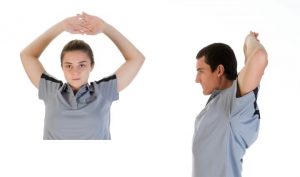
Above Head Chest Stretch: Sit upright and interlock your fingers. Bend your arms and place them above your head while forcing your elbows and hands backwards.

Reverse Shoulder Stretch: Stand upright and clasp your hands together behind your back. Keep your arms straight and slowly lift your hands upwards.
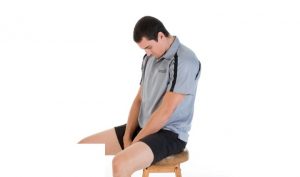
Sitting Upper Back and Neck Flexion Stretch: While sitting on a chair, cross your arms over and hang on to the edge of the chair between your legs. Let your head fall forward and then lean backwards.
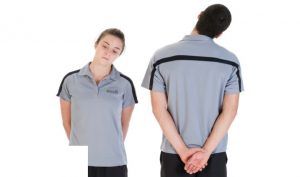
Lateral Neck Stretch: Look forward while keeping your head up. Slowly move your ear towards your shoulder while keeping your hands behind your back.

Rotating Neck Stretch: Keep your shoulders still and your head up. Slowly rotate your chin towards your shoulder.
Final Thoughts
Before starting any of these exercises, you need to realise that everyone is different, and you may require different exercises than these ones.
But if you feel tightness in your neck and shoulders, doing these stretches regularly, will help improve your overall flexibility and neck mobility.
Want a professional massage to relieve your neck and shoulder tension?
Book a massage with us today.
Recent Comments